ISBN: 978-65-5113-491-3
IDIOMA: Português
NÚMERO DE PÁGINAS: 310
NÚMERO DA EDIÇÃO: 1
DATA DE PUBLICAÇÃO: 27/02/2026
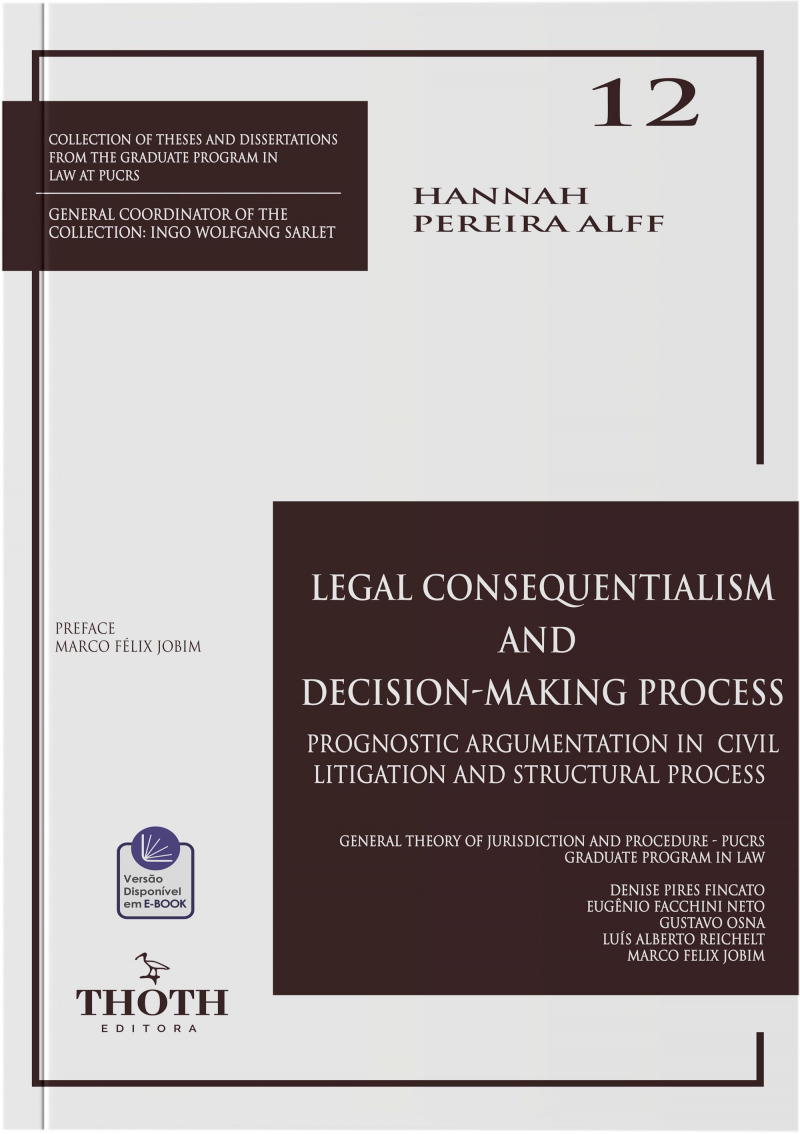
O processo estrutural no Brasil completou 10 anos de estudo. Advogados, juízes, promotores e operadores do Direito em geral, contudo, ainda não tomaram pleno conhecimento da importância e relevância prática desse instituto, não só porque aplicável aos processos coletivos, mas porque associado aos processuais de natureza individual tais como uma ação de reintegração de posse ou um inventário, de fato, agigantados. A melhor formulação do pedido deduzido na petição inicial, mesmo em processo eminentemente individual, refletirá um melhor tratamento ao problema estrutural e, por isso, maior eficácia do processo estrutural. Esta obra relacionou a sociedade contemporânea digital aos eventuais problemas estruturais.
PUCRS Collection Boards
About the author
Acknowledgements
Presentation
Preface
Context
Introduction
CHAPTER 1
THE NECESSARY UNDERSTANDING OF CONSEQUENTIALISM AS A THEORY
1.1 Origin and conceptual considerations of consequentialism
1.1.1 Consequentialism in Philosophy, Sociology and Law: proposals and problems
1.1.1.1 Niklas Luhmann
1.1.1.2 Chaïm Perelman
1.2 Consequentialism through the jurisdictional perspective
1.2.1 Consequentialist Arguments: What are those?
1.2.1.1 Robert Alexy
1.2.1.2 Neil MacCormick
1.2.1.3 Michael Sandel
1.2.1.4 Tércio Sampaio Ferraz Júnior
1.3 Summarizing the first chapter
CHAPTER 2
DECISION-MAKING PROCESS AND CONSEQUENTIALISM
2.1 Legal Interpretation: Why to interpret when it comes to legal matters
2.1.1 Models of interpretation and classic methods of interpretation
2.1.2 Problems and critics of interpretation methods: the need for reasonableness and proportionality
2.2 Legal Argumentation: What is it and What is it for
2.2.1 Scheme of arguments and criteria of a “good argument”
2.2.2 Consequentialism as a method of Legal Argumentation
2.2.2.1 Internal and External Consequentialism: decision-making process categorization
2.2.2.2 First and Second order consequentialism: the functional perspective
2.2.2.3 Acts and Rules Consequentialism: ethics categorization
2.3 The possibility of Prognostic Argumentation in decision-making process
2.4 The critics about Prognostic Argumentation
2.4.1 Consequentialism, Judicial Activism and Discretion
2.4.2 How political is consequentialism
2.5 Summarizing the second chapter
CHAPTER 3
CONSEQUENTIALISM: A STUDY THROUGH THE LENSES OF STRUCTURAL PROCESSES
3.1 Structural Processes: A historical approach
3.1.1 Characteristics of structural processes
3.1.2 State of Unconstitutional Affairs or Nonconformity State
3.1.3 Structural decisions
3.2 Structural process and the future-oriented role of the judiciary: a study through the case of Government of the Republic of South Africa and others v. Grootboom and others
3.2.1 Analysis of the Grootboom Case
3.2.2 The decision content of the Grootboom Case
3.2.3 Prognostic Argumentation within the Grootboom Case
3.3 Summarizing the third chapter
Final considerations
References
Appendix